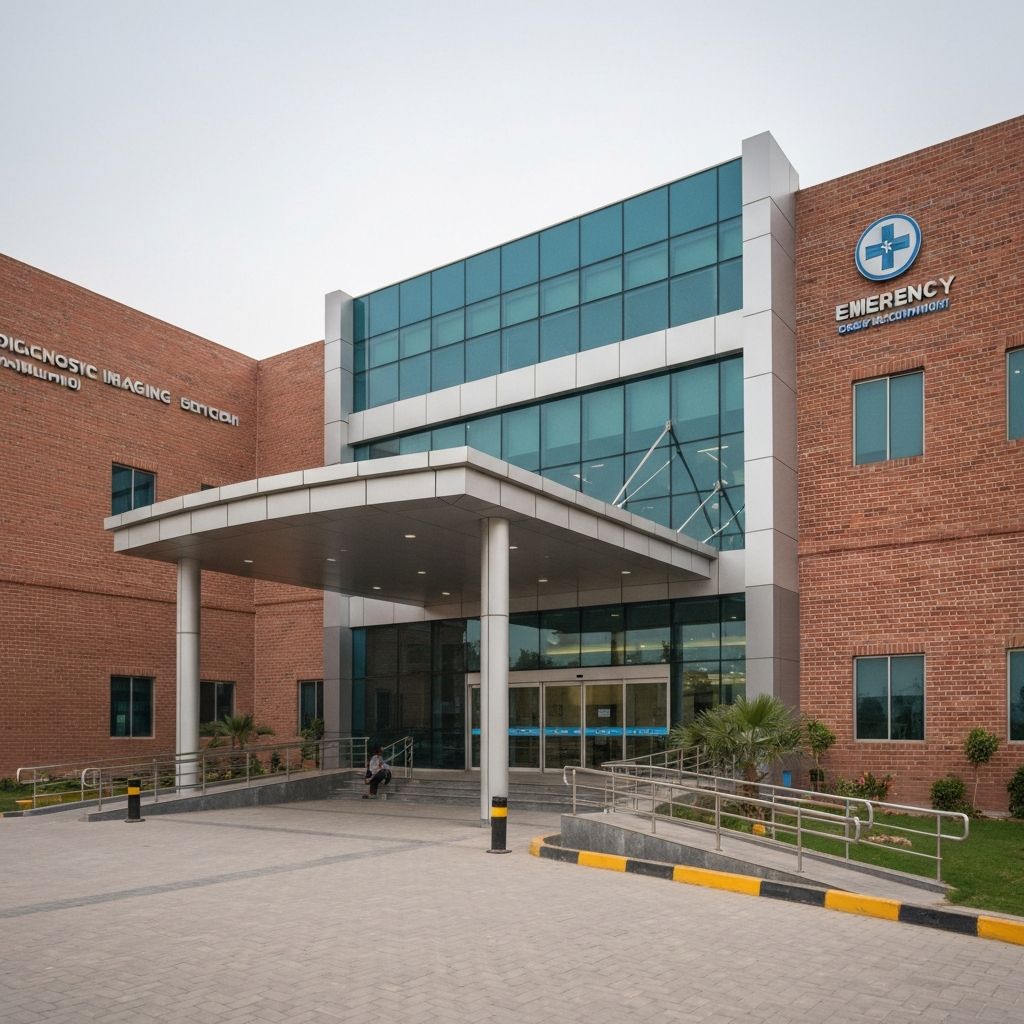
Medical Facility Architecture for Rawalpindi's Healthcare Landscape
Rawalpindi presents unique opportunities and challenges for healthcare architecture. The city's diverse population spans military families in cantonment areas, established urban communities, and growing suburban developments. Each demographic brings distinct healthcare expectations and accessibility requirements that architectural design must address thoughtfully.
Our healthcare architecture practice understands these nuances intimately. Whether designing a specialized cardiac center near CMH, a community clinic serving Satellite Town residents, or a diagnostic facility along Murree Road, we create facilities that serve their specific patient communities effectively while meeting modern medical standards.
Comprehensive Healthcare Design Services
Our medical facility architecture encompasses every aspect of healthcare environment design:
Hospital Campus Planning
Comprehensive master planning for multi-building hospital campuses with efficient inter-departmental connectivity and future expansion provisions.
Surgical Suite Design
Modern operating theatre complexes with laminar airflow systems, sterile corridors, and equipment integration meeting international surgical standards.
Intensive Care Environments
ICU and CCU layouts balancing continuous monitoring requirements with patient privacy and family visitation considerations.
Outpatient Department Planning
Efficient OPD layouts minimizing patient wait times through strategic registration, consultation room placement, and pharmacy integration.
Laboratory and Imaging Facilities
Specialized diagnostic spaces accommodating MRI, CT, X-ray equipment with appropriate shielding and patient preparation areas.
Emergency and Trauma Centers
High-throughput emergency departments with triage systems, resuscitation bays, and rapid access to critical care services.
Healing Environments Through Evidence-Based Design
Research consistently demonstrates that physical environment impacts patient recovery rates, staff satisfaction, and clinical outcomes. Our evidence-based design approach incorporates elements proven to enhance healing—abundant natural light reduces medication requirements, nature views decrease patient anxiety, and noise reduction improves sleep quality essential for recovery.
Rawalpindi's climate allows effective integration of courtyards and healing gardens within hospital designs. These therapeutic spaces benefit psychiatric patients, rehabilitation programs, and general patient wellness. Indoor-outdoor connections bring natural elements into clinical environments while maintaining environmental control necessary for medical facilities.
Operational Efficiency and Staff Productivity
Healthcare professionals spend significant time navigating facilities. Inefficient layouts waste nursing hours, delay emergency responses, and contribute to staff fatigue. Our designs minimize unnecessary walking through strategic placement of supply rooms, medication stations, and clinical workstations relative to patient rooms.
Nursing station design receives particular attention—clear sightlines to patient rooms, ergonomic workstation heights, and integrated technology systems enhance clinical capability. Clean and dirty utility separation prevents cross-contamination while maintaining convenient access. Staff rest areas and changing facilities support personnel wellness during demanding shifts.
Healthcare Facility Categories We Specialize In
Our portfolio encompasses diverse healthcare facility types serving Rawalpindi's communities:
General Hospitals
Full-service facilities with emergency, surgical, maternity, pediatric, and specialty departments serving broad patient populations.
Specialty Medical Centers
Focused facilities for cardiology, nephrology, oncology, or orthopedics with specialized equipment and treatment environments.
Community Health Centers
Primary care facilities providing preventive services, routine consultations, and basic diagnostic capabilities for local residents.
Diagnostic and Imaging Centers
Advanced diagnostic facilities housing imaging equipment, pathology laboratories, and specimen collection services.
Maternity and Women's Hospitals
Specialized facilities for obstetrics, gynecology, and neonatal care with family-centered birthing environments.
Sustainable Healthcare Building Practices
Healthcare facilities consume substantial energy for HVAC systems, medical equipment, and 24/7 operations. Our sustainable design strategies reduce operational costs while maintaining clinical environment standards. High-efficiency chillers, heat recovery systems, and intelligent building management substantially decrease energy consumption without compromising patient comfort.
Rawalpindi's electricity challenges make backup power systems essential for healthcare facilities. Our designs integrate generator systems, UPS provisions, and increasingly solar installations that provide energy security while reducing grid dependence. Water efficiency measures in non-clinical areas further reduce operating expenses.
Our Healthcare Design Methodology
Successful healthcare architecture requires deep understanding of clinical operations before design commences. Our collaborative methodology ensures facilities serve their intended purposes:
Discovery Phase
Extensive consultations with medical directors, nursing leadership, and administrative teams understanding operational requirements and institutional vision.
Programming and Planning
Detailed space programming, departmental adjacency analysis, and patient flow modeling establishing functional requirements before architectural design begins.
Schematic Design
Conceptual layouts with 3D visualization allowing stakeholder review and refinement before detailed design investment.
Design Development
Complete architectural documentation including structural coordination, MEP integration, and medical equipment specifications.
Construction Support
Ongoing site supervision, contractor coordination, and quality assurance ensuring built facilities match approved designs.
Local Expertise and Regulatory Knowledge
Healthcare architecture in Rawalpindi requires navigation of multiple regulatory frameworks—RDA building requirements, Pakistan Medical Commission standards, and healthcare licensing provisions. Our established relationships with approval authorities streamline submission processes and minimize approval delays.
Understanding local construction capabilities ensures designs are buildable with available materials and contractor expertise. We specify systems and finishes that local suppliers support, avoiding imported materials that create maintenance challenges. This practical approach delivers superior long-term facility performance.