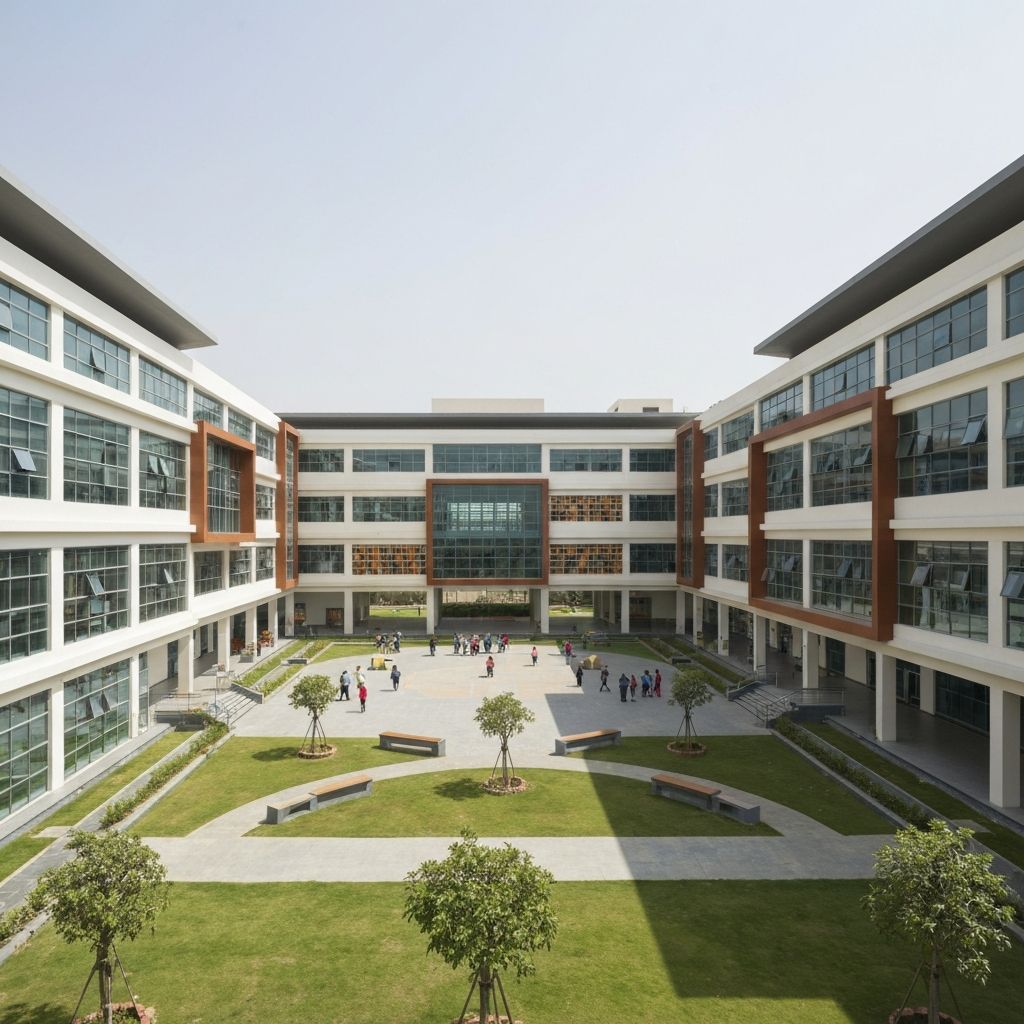
Educational Architecture Shaped for Islamabad's Learning Institutions
Islamabad hosts Pakistan's premier educational institutions—from prestigious international schools to leading universities and professional training academies. This concentration creates high expectations for educational facility design that reflects institutional quality and supports modern pedagogical approaches.
Our educational architecture practice understands that physical environments profoundly influence learning outcomes. Research demonstrates that well-designed schools improve student concentration, reduce behavioral issues, and enhance academic achievement. We translate these insights into facilities that actively support educational missions rather than merely containing them.
Comprehensive Educational Design Services
Our educational facility architecture addresses every learning environment type:
Campus Master Planning
Strategic campus layouts establishing building relationships, circulation systems, outdoor learning spaces, and future expansion provisions.
Classroom Environment Design
Learning spaces optimized for natural light, acoustics, flexibility, and technology integration supporting diverse teaching methodologies.
Laboratory and Workshop Facilities
Specialized science labs, computer facilities, and vocational workshops with appropriate safety systems and equipment integration.
Library and Resource Centers
Modern learning resource environments combining traditional library functions with digital access, collaborative spaces, and quiet study areas.
Sports and Recreation Facilities
Indoor gymnasiums, outdoor playing fields, swimming facilities, and multi-purpose halls supporting physical education and extracurricular activities.
Administrative and Support Buildings
Functional administration facilities, faculty offices, counseling centers, and student services supporting institutional operations.
Learning-Centered Design Philosophy
Contemporary educational architecture recognizes that learning happens everywhere—not just in traditional classrooms. Our designs create multiple learning environments: formal teaching spaces, collaborative project areas, quiet individual study zones, outdoor learning courtyards, and informal social spaces where peer learning naturally occurs.
Flexibility is paramount. Educational approaches evolve faster than buildings. Our designs incorporate movable partitions, reconfigurable furniture systems, and technology infrastructure supporting future pedagogical innovations. A classroom designed today must accommodate teaching methods not yet invented.
Educational Facility Types We Design
Our educational architecture portfolio encompasses:
Primary and Secondary Schools
Age-appropriate learning environments from early childhood through matriculation, with specialized spaces for different developmental stages.
International and Cambridge Schools
Premium facilities meeting international accreditation standards with advanced laboratories, creative arts spaces, and modern sports facilities.
Colleges and Higher Secondary
Intermediate and A-level institutions with subject-specialized facilities, career counseling spaces, and transition-appropriate environments.
Universities and Degree Colleges
Higher education campuses with lecture halls, research facilities, department buildings, student centers, and residential accommodations.
Professional Training Centers
Vocational and technical training facilities with workshop environments, simulation spaces, and industry-standard equipment integration.
Sustainable Educational Buildings
Educational institutions operate for decades—sustainability investments pay returns over building lifetimes. Our designs maximize natural daylight reducing artificial lighting requirements, incorporate natural ventilation where climate permits, and specify high-efficiency HVAC systems for controlled environments. Solar installations are increasingly viable for Islamabad schools seeking energy independence.
Beyond environmental sustainability, educational facilities teach through example. Green building features become learning opportunities—visible solar panels, rainwater harvesting systems, and energy monitoring displays integrate environmental education into daily campus experience.
Safety and Security Integration
Student safety is non-negotiable. Our educational designs incorporate controlled access points, visitor management systems, CCTV integration, and secure perimeter design without creating institutional atmospheres that impede learning. Fire safety systems exceed code requirements with age-appropriate evacuation planning.
Traffic management separates student circulation from service vehicles. Drop-off zones accommodate parent vehicles without creating congestion. Emergency vehicle access ensures rapid response capability while maintaining routine security protocols.
Our Educational Design Process
Educational architecture requires understanding institutional philosophy before design begins:
Educational Programming
Consultations with administrators, teachers, and educational consultants understanding pedagogical approaches and facility requirements.
Space Planning
Detailed analysis of enrollment projections, class sizes, specialty room requirements, and support space needs establishing program basis.
Concept Design
Architectural concepts establishing campus organization, building massing, and design character reflecting institutional identity.
Design Development
Complete architectural documentation with structural, mechanical, electrical, and interior specifications for construction.
Construction Administration
Site supervision ensuring construction quality matches design intent with timely completion for academic year requirements.